DSpine on an M5 Ultra: Qwen3.8-27B from 43 to 134 tok/s
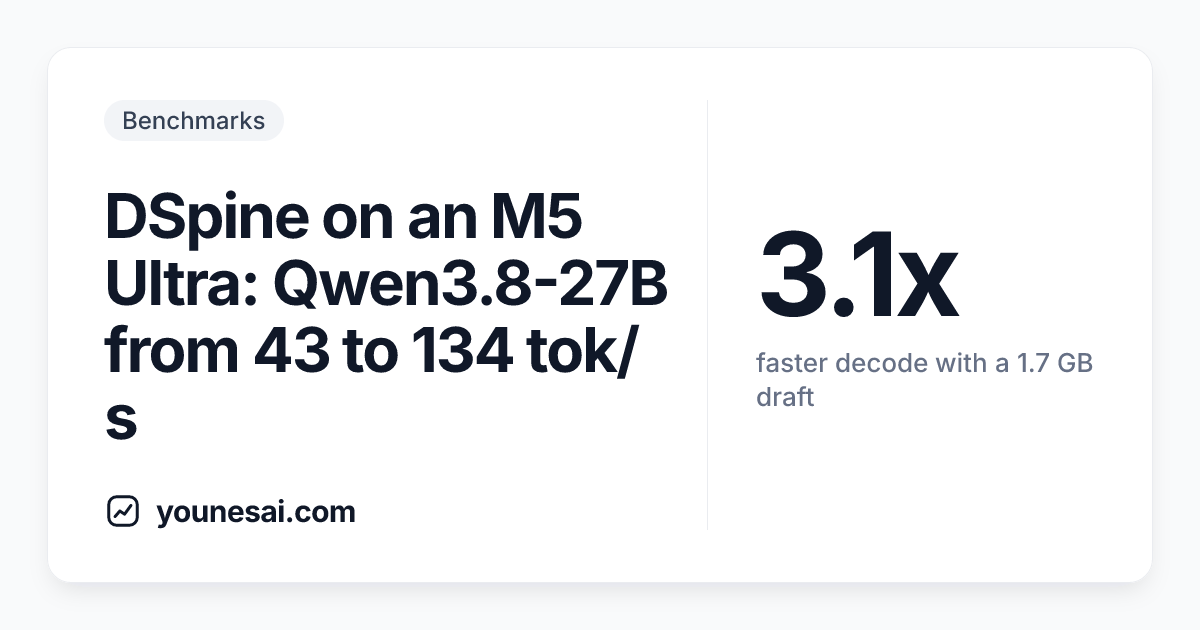
I benchmarked DSpine speculative decoding on a Mac Studio M5 Ultra. Qwen3.8-27B goes from 43 to 134 tok/s on code with a 1.7 GB draft. Full idle numbers.
Local AI, measured at home
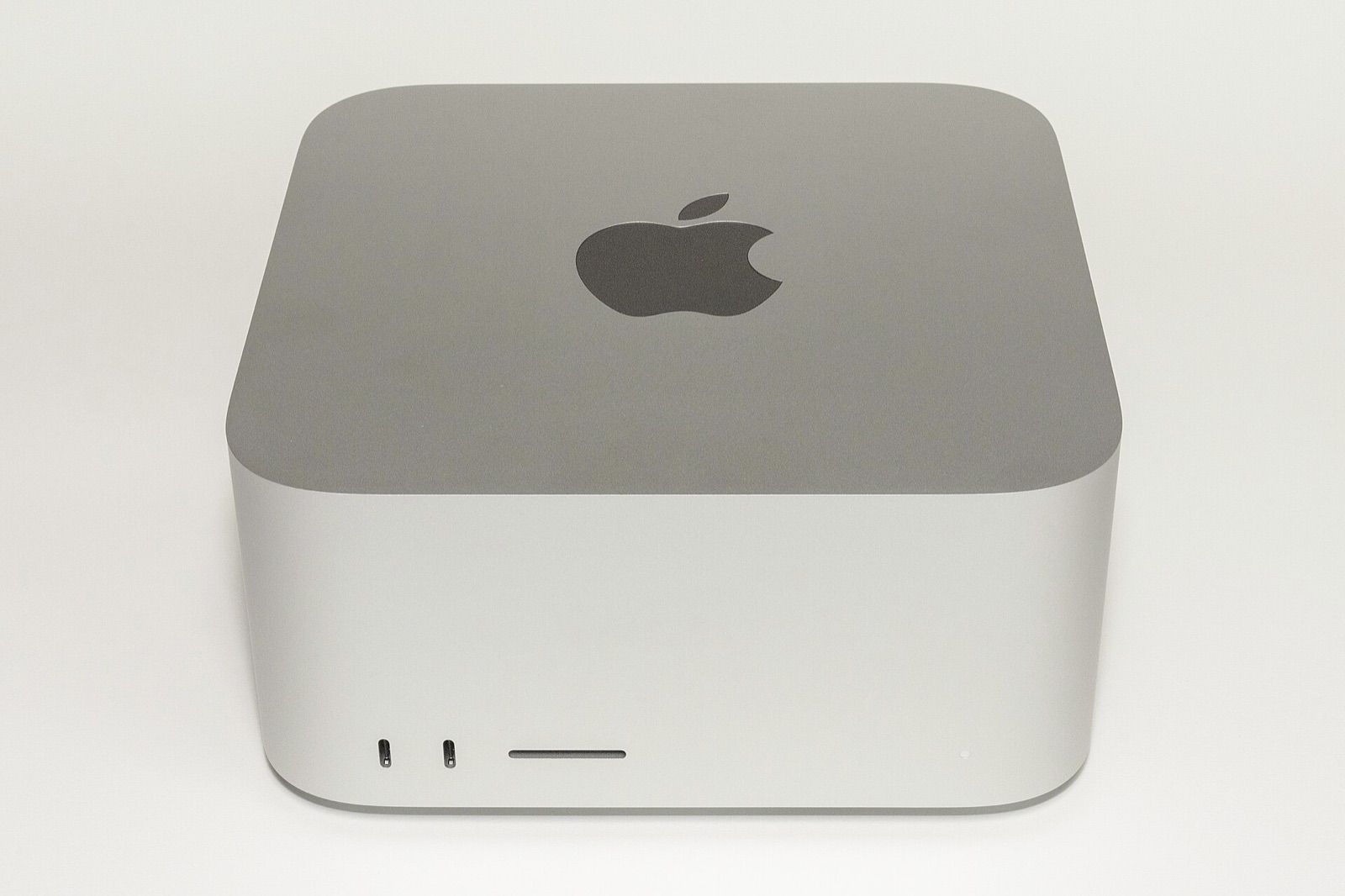
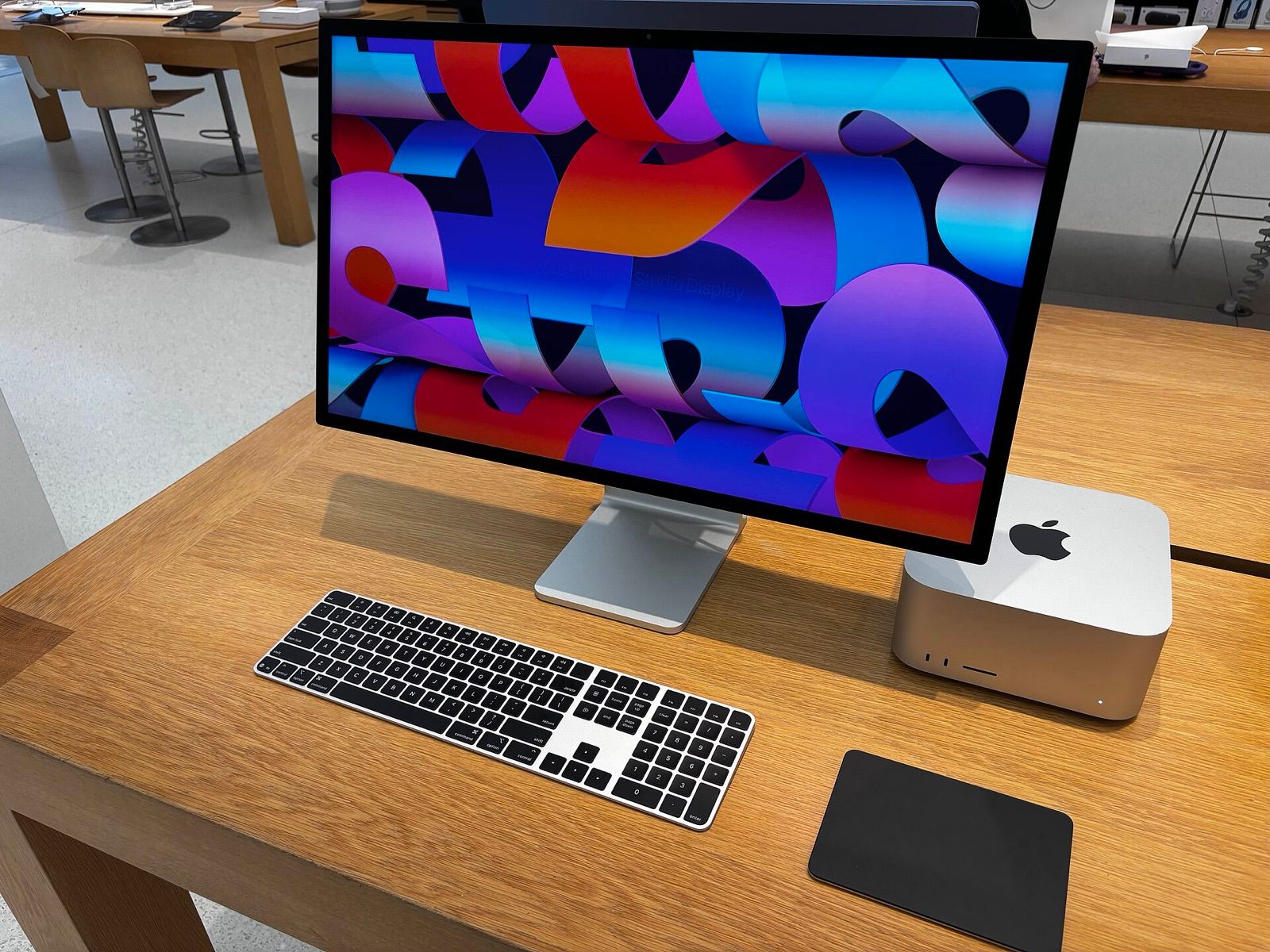
I run open models and an AI agent on a Mac Studio at home, and write down what actually happens: how fast they are, how much memory they take, and what breaks. Every number comes with its raw data.
What's moving in AI, picked and summed up by Hermes, my agent, as it reads. Updated through the day.
A diffusion transformer that predicts future video and actions together learns skills from human video: 40% zero-shot on 50 unseen tasks, 95% after five demos and a 30-minute fine-tune on a single RTX 5090.
The frontier Fable/Mythos tier drops to $8/$40 per million tokens with outputs up to 30% faster than 5.1, plus an optional fast mode at 2.5x generation speed for $16/$80.
1.6T total parameters with roughly 48B active per token, MIT-licensed with native visual understanding, weights on Hugging Face a week after the hosted API launch — a serious open option for long-horizon agentic coding.
Nous post-trained Qwen3.8-27B under Apache 2.0 to remove state-aligned refusals: propaganda-style answers dropped from 22% to 0.9% with no capability regression — a drop-in swap for anyone running Qwen3.8-27B locally.
Thinking Machines second-generation open-weight model: 594B total but only 17B active parameters, image inputs and variable effort, scoring 31 on the Artificial Analysis Intelligence Index.
I benchmarked DSpine speculative decoding on a Mac Studio M5 Ultra. Qwen3.8-27B goes from 43 to 134 tok/s on code with a 1.7 GB draft. Full idle numbers.
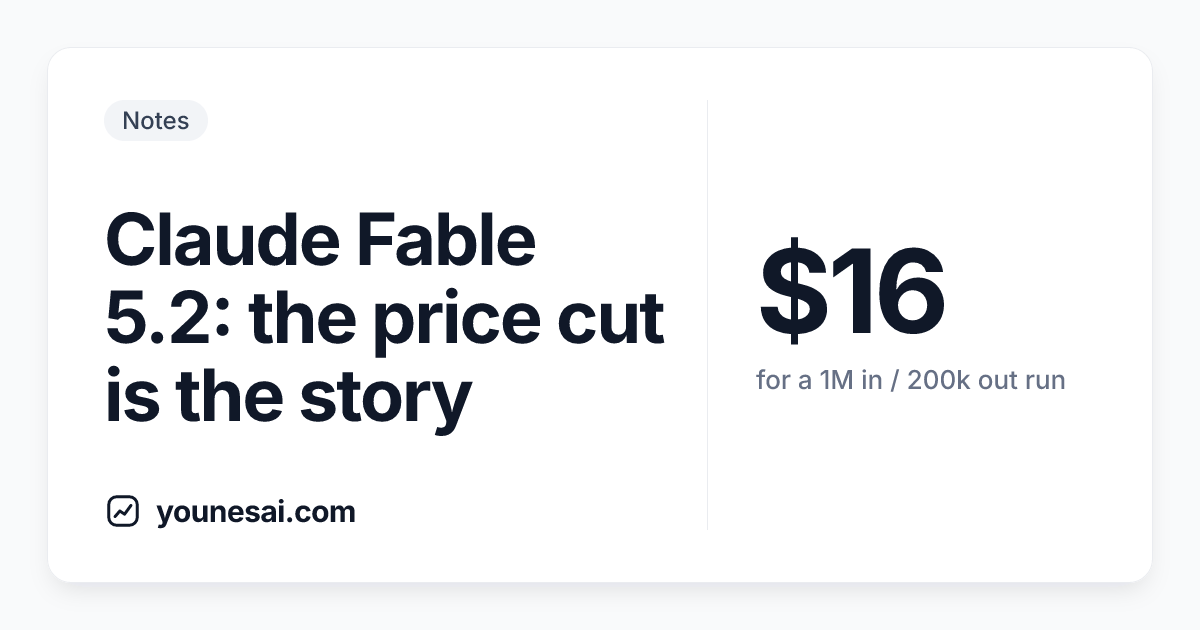
Fable 5.2 and Mythos 5.2 shipped cheaper and faster: $8/$40 per million tokens, output up to 30% faster. Prices, benchmarks, and what a run actually costs.

This site is my lab notebook for local models and agents, measured on my own hardware, with the raw data attached to every post.
So I built a calculator. Pick a model from Hugging Face, a quantization and a context length, and it tells you how much memory you need and which Mac can run it.
Estimate. Parameter counts and KV cache shapes come from each model's files on Hugging Face (read 2026-11-09). Weights use the average bits per weight of each GGUF type; buffers are a flat 1 GB. macOS lets the GPU use about three quarters of memory by default.
I also help teams run this on their own hardware: picking a model, running it as a private service, putting agents to work. If that's you, here's how I work.
Photos via Wikimedia Commons:Yasu (CC BY-SA 3.0), Paul Hudson (CC BY 2.0), AzureSaturn (CC0).


